Broken dishes. Shattered picture frames. A cracked mirror. A wine glass that didn't survive the trip.
Fragile items are the most common casualty of any move — and almost every breakage is preventable.
The problem isn't that moving is inherently dangerous for fragile items. The problem is that most people pack fragile items the same way they pack everything else: quickly, without much thought, and with whatever materials happen to be nearby.
Packing fragile items well takes a little more time and care. But it's not complicated. Here's exactly how to do it.
The Core Principle: Immobilize Everything
The reason fragile items break during a move is almost always the same: they move around inside the box.
When a box is lifted, set down, slid across a truck floor, or stacked under other boxes, the contents shift. If a glass can slide two inches and hit the side of the box, it will. If a plate can rattle against another plate, it will. And eventually, something breaks.
The goal of packing fragile items is to make it physically impossible for anything to move inside the box. Every item should be individually wrapped, every gap should be filled, and the box should feel solid — not like something is shifting around inside — when you shake it.
Keep that principle in mind and everything else follows naturally.
What You'll Need
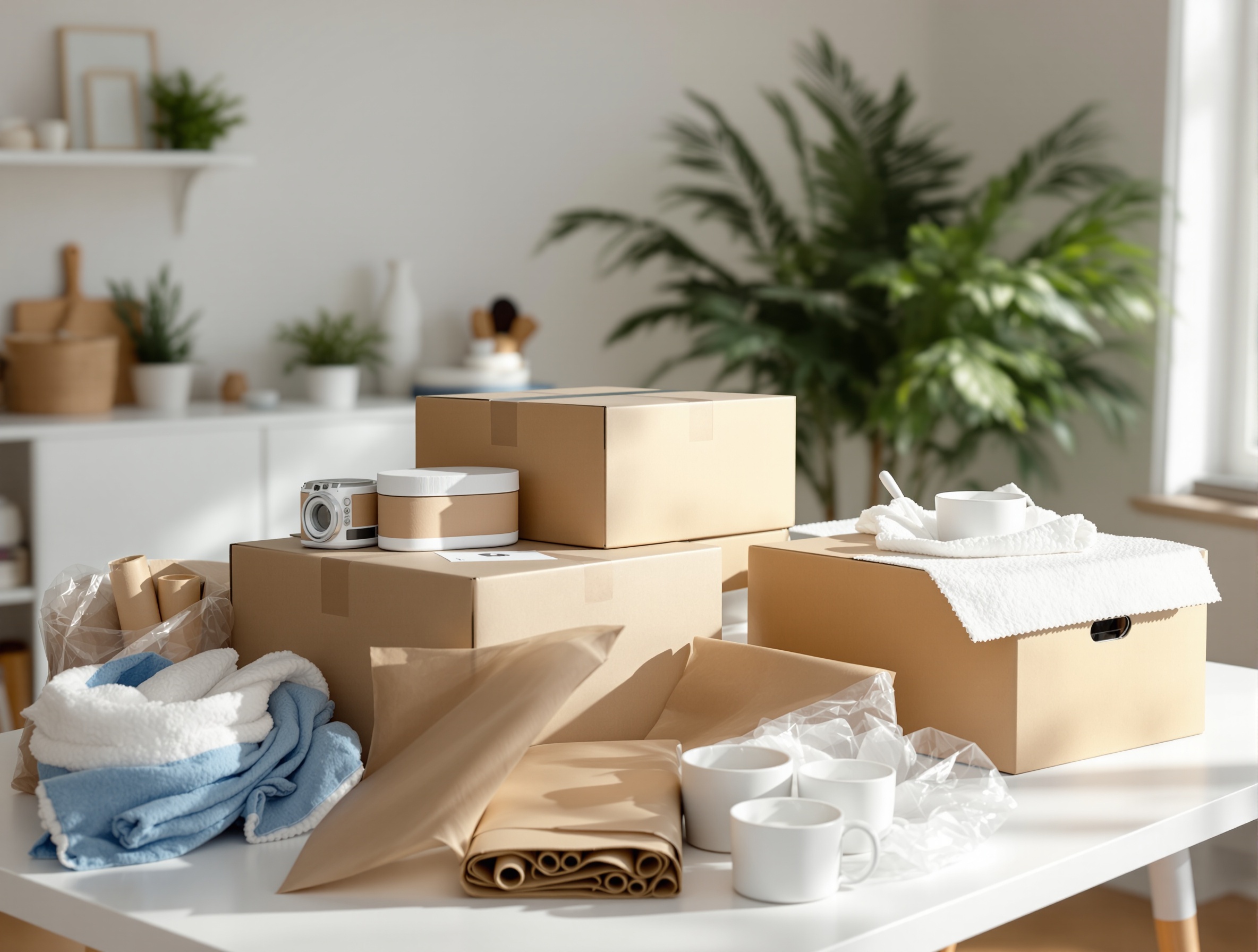
You don't need to spend a lot of money on packing supplies to protect fragile items. Here's what works:
- Packing paper (unprinted newsprint) — the most versatile wrapping material
- Bubble wrap — best for items with irregular shapes or extra-delicate pieces
- Soft items you're already moving: dish towels, t-shirts, socks, blankets
- Small and medium boxes — never large boxes for fragile items
- Packing tape
- A permanent marker for labeling
How to Pack Dishes
Dishes are the item most people pack incorrectly — and the most common thing that breaks.
The single most important thing to know about packing dishes: they should be packed vertically, on their edges, like records in a crate. Not stacked flat.
When plates are stacked flat, all the weight and pressure concentrates on the bottom plate. One hard bump and the stack cracks. When plates are packed on their edges, the force is distributed along the rim — the strongest part of the plate — and they're far more resistant to impact.
Here's the full process:
- Line the bottom of the box with several inches of crumpled packing paper or a folded towel
- Wrap each plate individually — lay it in the center of a sheet of packing paper, fold the corners over, and wrap it completely
- Stand the wrapped plates on their edges in the box, side by side
- Fill any gaps between plates with crumpled paper so nothing can shift
- Add a layer of padding on top before closing the box
- Label the box FRAGILE and THIS SIDE UP on all four sides
For extra protection on valuable or delicate plates, wrap each one in bubble wrap after the initial paper wrap.
How to Pack Glasses and Mugs
Glasses require a bit more care than plates because they're hollow — which means they can collapse inward under pressure if they're not properly supported.
The key step most people skip: stuff the inside of each glass with crumpled packing paper before wrapping the outside. This internal support prevents the glass from being crushed if something presses against it.
The full process:
- Stuff the inside of each glass with crumpled packing paper
- Place the glass at the corner of a sheet of packing paper and roll it diagonally, tucking in the ends as you go
- Secure with a small piece of tape
- Pack glasses upright in the box — never upside down
- Place heavier glasses on the bottom, lighter and more delicate glasses on top
- Never stack glasses directly on top of each other without padding between them
- Fill all gaps with crumpled paper
For wine glasses and stemware, the stem is the most vulnerable part. Wrap the stem separately with extra layers of paper or bubble wrap before wrapping the rest of the glass. Consider packing stemware in individual cells if you have a divided box.
How to Pack Picture Frames and Artwork
Picture frames — especially those with glass — are one of the most commonly broken items in a move. The glass is fragile, the corners are vulnerable, and most people just wrap them in a single layer of paper and hope for the best.
For framed artwork with glass:
- Place an X of masking tape across the glass — this won't prevent the glass from breaking, but it will hold the pieces together if it does break, preventing them from scattering and causing further damage
- Wrap the entire frame in several layers of packing paper, paying extra attention to the corners
- Add a layer of bubble wrap over the paper
- Pack frames vertically — on their edges — never flat
- Use a box that fits the frame snugly, or fill the extra space with padding so the frame can't shift
For large or valuable artwork, consider purchasing specialty picture boxes — flat boxes designed specifically for framed art. They're available at most moving supply stores and provide much better protection than trying to fit artwork into a standard box.
How to Pack Mirrors
Mirrors are large, heavy, and extremely fragile. They deserve special attention.
Like picture frames, apply an X of masking tape across the mirror surface before wrapping. This holds the glass together if it cracks.
Wrap the mirror in several layers of moving blankets or bubble wrap, securing with tape. For large mirrors, consider renting a mirror box — a flat, adjustable box designed specifically for mirrors — from a moving supply store.
Always transport mirrors vertically, never flat. A mirror lying flat in a truck is far more likely to crack than one standing on its edge.
How to Pack Lamps and Lampshades
Lamps have two distinct parts that need to be packed separately: the base and the shade.
Lamp bases are usually heavy and relatively durable. Wrap the base in bubble wrap or packing paper and pack it in a box with padding on all sides.
Lampshades are the tricky part. They're large, oddly shaped, and the fabric or material can be easily dented or crushed. The best approach:
- Never pack a lampshade in a box with other items — it will get crushed
- Pack lampshades in their own box, right-side up
- Stuff the inside of the shade with crumpled packing paper for support
- Place the shade in a box that fits it closely, with padding around the outside
- If you have multiple lampshades, you can nest smaller ones inside larger ones with paper between them
How to Pack Vases and Decorative Items
Vases, figurines, and other decorative items come in all shapes and sizes, but the packing principle is the same: wrap individually, immobilize completely.
For vases:
- Stuff the inside of the vase with crumpled packing paper
- Wrap the outside in several layers of packing paper, then bubble wrap
- Pack upright in a box with padding on all sides and between items
- Never pack vases on their sides — they're much more likely to crack
For small figurines and delicate decorative items, wrap each one individually in bubble wrap and pack them together in a small box with plenty of padding. Don't mix fragile decorative items with heavier objects.
How to Pack Electronics
Electronics aren't fragile in the same way as glassware, but they're expensive and sensitive to impact, moisture, and static.
The best option is always to use the original packaging if you still have it. Manufacturers design that packaging specifically to protect the device during shipping.
If you don't have original packaging:
- Wrap each device in anti-static bubble wrap (regular bubble wrap can generate static that damages electronics)
- Pack in a snug box with foam or padding on all sides
- Remove batteries from devices before packing
- Pack cables and accessories separately in labeled bags
- Mark boxes containing electronics as FRAGILE and keep them away from heavy items
For TVs and monitors, specialty TV boxes are available at moving supply stores and are worth the investment for large screens.
Box Selection and Weight Distribution
The box you choose matters as much as how you pack.
Always use small or medium boxes for fragile items. A large box full of dishes is nearly impossible to lift safely and puts enormous stress on the bottom of the box. Small boxes are easier to handle, easier to stack, and less likely to fail.
Within each box, follow this principle: heaviest items on the bottom, lightest and most delicate on top. Never put a heavy item on top of a fragile one.
Every box should be full — not overflowing, but full. A half-empty box will collapse when stacked. Fill any remaining space with crumpled paper, towels, or clothing.
Labeling Fragile Boxes
Labeling fragile boxes correctly is the last line of defense.
Write FRAGILE in large letters on all four sides and the top of every box containing breakable items. Also write THIS SIDE UP with an arrow so movers know which way the box should be oriented.
Don't assume movers will be careful with unlabeled boxes. Clear labeling communicates exactly how a box should be handled — and most professional movers will respect it.
The box should feel solid when you shake it — nothing should be sliding around inside.
The Bottom Line
Packing fragile items well comes down to one principle: immobilize everything.
Wrap every item individually. Fill every gap. Use the right size box. Pack heavy items on the bottom. Label everything clearly.
It takes a little more time than throwing things in a box and hoping for the best. But when you arrive at your new home and unpack every dish, glass, and picture frame in perfect condition, that extra time will feel very well spent.