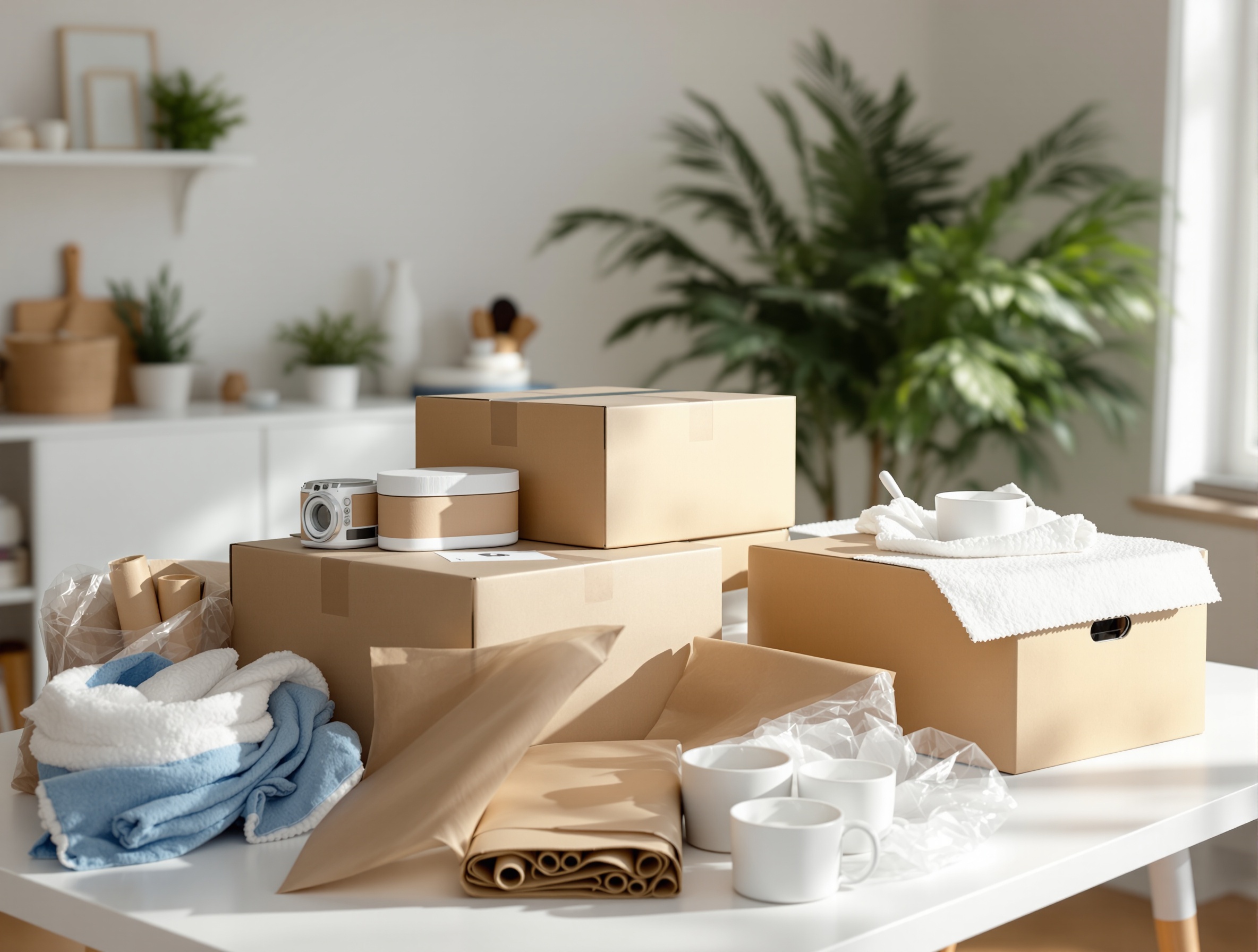
Ask anyone who has moved before which room gave them the most trouble, and most will say the same thing: the kitchen.
It makes sense. The kitchen is the most densely packed room in most homes. It contains fragile items, heavy items, sharp items, perishable items, and awkwardly shaped items — often all within a few feet of each other.
Most people underestimate how long the kitchen takes to pack. They leave it for last, run out of time, and end up throwing things in boxes without any real system. Then they spend the first week in their new home digging through random boxes trying to find a spatula.
Here's how to pack your kitchen properly — so everything arrives safely and you can actually find things when you need them.
Start Earlier Than You Think
The kitchen should be one of the first rooms you start packing — not the last.
Most people have far more kitchen items than they actually use on a daily basis. Specialty appliances, seasonal bakeware, extra sets of dishes, serving platters — these things can be packed weeks before your move without any impact on your daily life.
A good approach is to pack in layers:
- 4–6 weeks out: Pack everything you use rarely — specialty appliances, extra dishes, seasonal items, cookbooks
- 2–3 weeks out: Pack items you use occasionally — the second set of pots, the blender you use once a month, bakeware
- Moving week: Pack everything except the bare essentials you need to get through the last few days
Related Guide
The Ultimate Moving Checklist: 8 Weeks Before Move Day — see exactly when to pack each room in your timelineDeclutter Before You Pack a Single Box
The kitchen is one of the best rooms to declutter before a move.
Most people have duplicate utensils, appliances they never use, mismatched containers with missing lids, and expired pantry items taking up space. Moving is the perfect opportunity to get rid of all of it.
Go through every cabinet and drawer and ask yourself honestly: Do I actually use this? If the answer is no, donate it, sell it, or throw it away. There's no point in carefully packing and moving something you don't want.
Pay special attention to:
- Expired pantry items and spices (check every date)
- Duplicate tools — do you really need four wooden spoons?
- Appliances you haven't used in over a year
- Plastic containers without matching lids
- Chipped or cracked dishes and glasses
Related Guide
Decluttering Before You Move: A Room-by-Room Guide — includes a full kitchen declutter walkthroughUse the Right Boxes for the Right Items
One of the most common kitchen packing mistakes is using the wrong size box for the wrong items.
Heavy items — dishes, pots, canned goods, small appliances — should always go in small boxes. A large box full of dishes is nearly impossible to lift safely and is very likely to break.
Save large boxes for lightweight kitchen items like plastic containers, dish towels, and pantry items that aren't too heavy.
If you're renting plastic moving totes instead of using cardboard boxes, the same principle applies — distribute weight evenly and don't overload any single tote.
How to Pack Dishes
Dishes are the item most people worry about — and for good reason. Improperly packed dishes are one of the most common sources of breakage during a move.
The key insight most people miss: plates should be packed vertically, on their edges, like records in a crate — not stacked flat. Plates stacked flat put all the pressure on the bottom plate, which is how they crack. Packed vertically, the pressure is distributed evenly and they're far less likely to break.
Here's the process:
- Line the bottom of the box with crumpled packing paper or a folded towel for cushioning
- Wrap each plate individually in packing paper or a dish towel
- Stand plates on their edges, side by side — never flat
- Fill any gaps with crumpled paper so nothing can shift
- Add a layer of padding on top before closing the box
- Mark the box FRAGILE and THIS SIDE UP on all sides
Related Guide
How to Pack Fragile Items Without Breaking Them — detailed techniques for dishes, glasses, mirrors, and moreHow to Pack Glasses and Mugs
Glasses and mugs are more fragile than dishes and need extra care.
Stuff the inside of each glass with crumpled packing paper or a rolled-up sock — this provides internal support and prevents the glass from collapsing inward if pressure is applied. Then wrap the outside in packing paper or bubble wrap.
Pack glasses upright, not upside down. Place heavier glasses on the bottom and lighter, more delicate glasses on top. Never stack glasses directly on top of each other without padding between them.
For wine glasses and other stemware, wrap the stem separately with extra padding. These are the most vulnerable part and the most likely to snap.
How to Pack Pots and Pans
Pots and pans are heavy and awkward, but they're generally not fragile — so the main challenge is packing them efficiently without making boxes too heavy.
Nest smaller pots inside larger ones to save space. Place a layer of packing paper or a dish towel between each pot to prevent scratching.
Pack lids separately, wrapped in paper, and stored upright in a box. Lids packed loose inside pots tend to rattle around and can chip the enamel.
Cast iron cookware deserves special mention: it's extremely heavy. Pack cast iron pieces individually in small boxes, and never put more than one or two pieces in the same box.
How to Pack Small Appliances
If you still have the original boxes for your appliances, use them — they're designed specifically to protect those items during transport.
If you don't have original packaging, wrap each appliance in bubble wrap or a towel and pack it snugly in a box with padding on all sides. Make sure nothing can shift around inside the box.
A few important tips for appliances:
- Remove and pack blades, attachments, and accessories separately — label the bag so you know which appliance they belong to
- Wrap cords neatly and secure them with a rubber band or twist tie
- For the coffee maker, run a cleaning cycle before packing and make sure the water reservoir is completely empty
- For the toaster, remove the crumb tray and empty it before packing
How to Handle the Pantry
The pantry is where most people make their biggest kitchen packing mistake: they try to move everything.
In the weeks before your move, make a deliberate effort to use up pantry items. Plan meals around what you have. Use up the pasta, the canned goods, the half-empty bags of rice. The less you have to move, the better.
For items you do move:
- Check every expiration date — don't move expired food
- Pack pantry items in small to medium boxes — canned goods are heavy
- Seal any open packages with tape or rubber bands to prevent spills
- Pack oils, vinegars, and other liquids in sealed plastic bags inside the box in case of leaks
- Consider donating non-perishable items to a food bank rather than moving them
How to Pack Knives and Sharp Items
Sharp kitchen items need to be packed carefully — both to protect the items themselves and to protect anyone handling the boxes.
Wrap each knife individually in several layers of packing paper and secure with tape. Never pack knives loose in a box where someone could reach in and cut themselves.
If you have a knife block, wrap the entire block (with knives inside) in bubble wrap and pack it in a box. This is the safest and most efficient way to move a knife set.
Label any box containing knives or sharp items clearly on the outside.
Pack an Essentials Kit for Moving Day
On moving day and the first night in your new home, you don't want to dig through boxes to make a cup of coffee or cook a simple meal.
Set aside a small box or bag with the kitchen essentials you'll need for the first 24 to 48 hours:
- Coffee maker and coffee (or an electric kettle and tea)
- One pot and one pan
- A few plates, bowls, and sets of cutlery
- A can opener
- Dish soap and a sponge
- Paper towels
- A few easy-to-prepare food items
Keep this box with you — not in the moving truck — so you have access to it immediately when you arrive.
Label Everything Clearly
Every kitchen box should be labeled on at least two sides with:
- The room it belongs to (Kitchen)
- A brief description of the contents (Dishes, Glasses, Pots & Pans, Pantry, etc.)
- FRAGILE if it contains breakable items
- HEAVY if it's a particularly heavy box
Good labeling makes unpacking dramatically faster. Instead of opening every box to find the one with the coffee mugs, you can go straight to it.
The Bottom Line
The kitchen is the hardest room to pack, but it doesn't have to be chaotic.
Start early, declutter before you pack, use the right boxes for the right items, and pack fragile items with care. Set aside an essentials kit so you're not helpless on moving day.
Follow these steps and your kitchen will be packed efficiently, arrive safely, and be up and running in your new home faster than you'd expect.